Comparison of the core advantages and disadvantages of rigid rails and linear guides
- Share
- publisher
- Stitch
- Issue Time
- Dec 20,2025
Summary
Hardened guideways provide high load capacity and strong vibration damping, making them suitable for heavy-duty machining, but they have higher friction, maintenance costs, and limited speed. Linear guideways offer high precision, fast movement, easy assembly, and long service life, making them ideal for modern high-efficiency machining. ZOPO CNC offers hardened, linear, and hybrid guideway solutions to meet diverse machining needs.
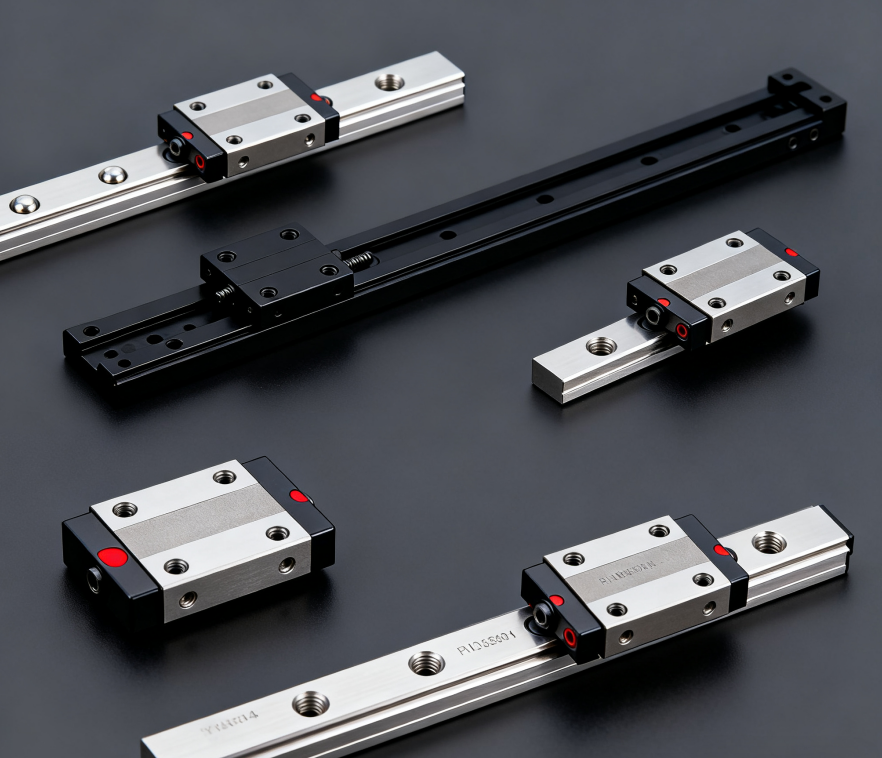
In machine tools and automated equipment, guideways are key components ensuring motion accuracy and stability. Among them, Hardened guideways are the traditional classic type, while linear guideways are the modern mainstream choice. Each has its advantages and disadvantages and is suitable for different machining scenarios. The following systematically reviews and compares the core advantages and disadvantages of both based on practical application needs, providing a reference for equipment selection and use.
Advantages and Disadvantages of Hardened Guide Rails
Hardened guide rails are a widely used type of guide rail in traditional machine tools. Their structure is similar to that of the machine tool base, column, and worktable.The main components are molded in one piece, showcasing distinctive features through a unique design.

Advantages
(1) High load-bearing capacity:
The large contact area of the hardened rails allows them to withstand machining loads with large cutting depths and feed rates, making them particularly suitable for the high-intensity operation requirements of roughing machine tools. They exhibit stable and reliable performance under heavy loads.
(2) Excellent operational stability:
The large contact area provides excellent vibration resistance, resulting in high machine tool stability during operation. Therefore, they are commonly used in equipment with stringent vibration control requirements, such as grinding machines and other precision machining tools, effectively ensuring machining accuracy.
Disadvantages
(1) Prominent material and forming defects:
Hardened rails are mostly cast, and the material is prone to casting defects such as sand inclusions, porosity, and looseness. These defects directly affect the service life of the guide rails and the overall accuracy of the machine tool, creating potential problems for subsequent use.
(2) High machining difficulty:
Due to the integrated design with the core components of the machine tool, controlling the form and position tolerances and surface roughness during machining is difficult. Furthermore, the process stability of key processes such as aging treatment and quenching is difficult to guarantee, easily leading to parts machining quality failing to meet assembly requirements.
(3) High assembly threshold:
Assembling hardened rails requires not only skilled technicians proficient in overall machine tool precision control but also specialized tools such as scrapers, straightedges, dial indicators, and micrometers. It is a complex process combining technical skill and physical strength, making it difficult for ordinary workers to handle.(4)Shorter service life:
Hardened rails operate using sliding friction, with friction far exceeding that of linear guides' rolling friction. Especially when lubrication is insufficient, wear intensifies dramatically. Under the same maintenance and usage conditions, their service life is generally shorter than that of linear guides.
(5) High maintenance costs:
Hardened rail maintenance is difficult and costly. If scraping is insufficient, it may require disassembling large machine parts for re-quenching and processing; in extreme cases, recasting may be necessary. Maintenance cycles are long and significantly impact production.
(6) Limited operating speed:
The high resistance generated by sliding friction prevents hardened rails from operating at high speeds, conflicting with modern high-efficiency machining concepts. Furthermore, some operators lack professional maintenance knowledge and easily neglect guide rail lubrication, leading to problems such as rail burn-out and excessive wear, causing fatal damage to machine tool precision. Advantages and disadvantages of linear guides
Linear guides, as the mainstream guide type in modern machine tools and automation equipment, are supplied as standard parts. With their structural advantages, they can adapt to a variety of processing needs and are gradually becoming the first choice for high-precision and high-efficiency equipment.
1. Advantages
(1) Convenient and efficient assembly:
The transmission mechanism composed of linear guides and lead screws is the core guarantee of machine tool accuracy. Both are standardized components with strong precision controllability. Operators can complete high-quality assembly with simple training, significantly reducing the assembly threshold and time cost.
(2) Flexible and diverse selection:
The structural form, precision grade, lubrication method, load-bearing capacity, and running speed of linear guides can all be selected as needed. Adaptable models can be flexibly configured according to machine tool design requirements, offering excellent adaptability.
(3) High running speed:
Utilizing rolling friction and high-precision machining processes, high-speed machine tool operation can be achieved, especially with significant advantages in idle speed. This ensures both the accuracy and stability of high-speed operation while greatly improving machining efficiency and precision.
(4) Excellent machining accuracy:
As a standardized product, the material selection and machining process of linear guides are within a controllable range, resulting in high precision stability. Therefore, they are widely used in precision machining tools, effectively guaranteeing the machining accuracy requirements of the equipment.
(5) Long service life:
The rolling friction operation significantly reduces friction, resulting in higher transmission efficiency and effectively reducing wear. Under normal use and maintenance, its service life is far superior to that of hard rails.
(6) Low maintenance cost:
As a standard component, linear guides are easy to repair and replace, similar to replacing screws. Only simple precision adjustments are needed afterward, greatly reducing maintenance difficulty and cost compared to hard rails.
(7) Short delivery cycle:
The delivery cycle of most linear guides can be controlled within half a month. Even when using foreign brands, the cycle is relatively controllable; while hard rails, if involving recasting or other processes, may have a delivery cycle of several months, affecting production progress.
2. Disadvantages
(1)Relatively weak load-bearing capacity:
Compared to hard rails, linear guides have slightly lower load-bearing capacity. However, mainstream manufacturers have significantly improved their load-bearing performance through structural optimization, and can meet the needs of conventional processing except in extreme heavy-load conditions.
(2) Slightly Insufficient Stability:
Linear guides lag behind rigid guides in vibration resistance, but with technological advancements, the stability of modern linear guides has significantly improved, making them suitable for most equipment designs without special requirements.
(2)High Protection Requirements:
Linear guides are slender and lack rigidity, making them susceptible to bending and deformation during transportation and assembly, leading to loss of precision. Furthermore, as steel components, they are prone to corrosion upon contact with water or other solvents without proper rust prevention, further affecting their accuracy. Therefore, extra attention must be paid to protection.
ZOPO offers a versatile lineup that includes models with hard rails, linear guide rails, and even hybrid configurations integrating both hard and linear rails. This diversified range is purpose-built to cater to the unique machining requirements of different users, ensuring optimal performance and precision across varied manufacturing scenarios.